Orchid City
Developed the world's first regenerative real estate framework achieving 140% net-positive carbon reduction.
The Problem
Cities consume up to 80% of global energy production and emit over 70% of global CO2 emissions. Over 25% already experience severe water shortages, and by 2030 an additional 40% of the world's population will face inadequate and affordable housing. Conventional urban development perpetuates these crises rather than solving them.
The challenge was to create a replicable framework, not a single project, that integrates hundreds of regenerative solutions into location-specific blueprints. Each deployment had to be financially viable while achieving net-positive environmental outcomes across energy, water, food, and materials.
Process
Systemic research and partner integration
Except combined decades of research and design with the experience of over 25 partners, building a framework that integrates systemic data and analysis tools. The result generates location-specific development blueprints rather than generic sustainability checklists.Data-driven blueprint generation
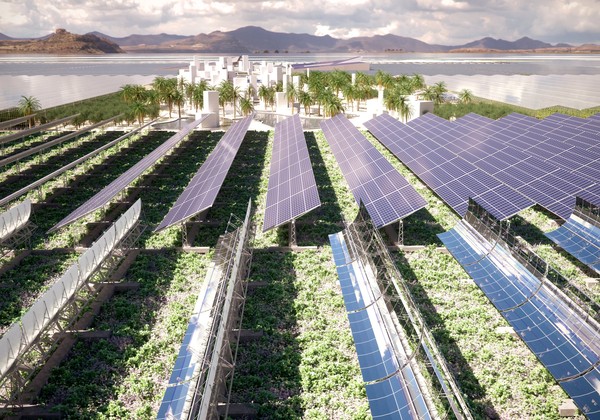
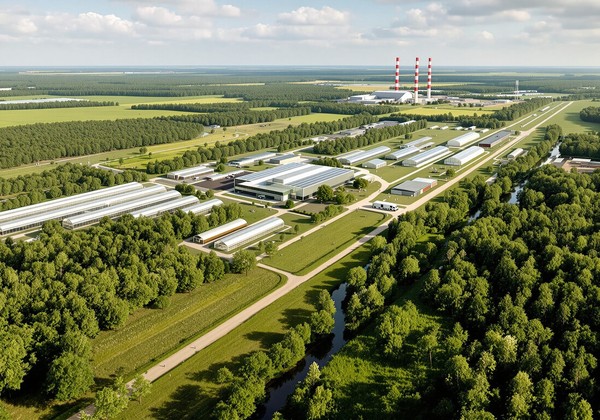
The Orchid City framework uses extensive databases of proven solutions, cross-referenced with local conditions, to calculate optimal configurations for each deployment. This produces specific recommendations for energy, water, food, waste, mobility, and social systems.Multi-scale application
The framework scales from individual buildings to neighborhoods, towns, and full cities. Each scale benefits from the same systemic approach while adapting to local governance, climate, culture, and economic conditions.Outcomes
- Carbon reduction
- 140%
- Net-positive per capita reduction in carbon emissions
- Sustainable jobs
- 8,000+
- Per city of 15,000 residents
- Trees planted
- 1.1 million
- Per city deployment
- Partners
- 25+
- Multi-disciplinary global partnership network
Gallery
Credits
Lead: Tom Bosschaert.
Except team: Emma Westerduin (Architect and Project Manager), Jacob Verhaart (Head of Science, Industrial Ecologist), Eranda Janku (Head of Urban Planning), Chi Nguyen (Regional Director Asia), Mykola Liasovskyi (Research and Business Development), Ruben Bosschaert (Technology and research specialist, physicist).
Except team: Emma Westerduin (Architect and Project Manager), Jacob Verhaart (Head of Science, Industrial Ecologist), Eranda Janku (Head of Urban Planning), Chi Nguyen (Regional Director Asia), Mykola Liasovskyi (Research and Business Development), Ruben Bosschaert (Technology and research specialist, physicist).
More urban planning
Working on something with this shape?
We take commissions where systemic complexity is the central design challenge. Tell us about the place, the constraint, or the problem.