Symbiosis in Development (SiD): The Framework Behind Every Project
Tom Bosschaert
Founder, Systems Design Director
Symbiosis in Development (SiD) is the framework Except uses for every project. Developed over 25 years across more than 700 engagements on six continents, it integrates systems thinking, network theory, and lifecycle analysis into a single operational method for designing at systemic scale.
SiD is open-source and freely available under Creative Commons BY-SA 4.0 licensing. The complete 480-page omnibus book, training materials, and quick guides can be found at thinksid.org.
Why a framework?
Sustainability problems are systemic. A building is not just a building: it is a node in energy networks, water systems, transport grids, economic circuits, governance structures, and social contracts. Intervening at one point without understanding these connections produces rebound effects, cost overruns, and missed opportunities.
Most approaches treat sustainability as a checklist of isolated metrics. SiD treats it as a property of whole systems. The difference determines whether a project achieves incremental improvement or structural transformation.
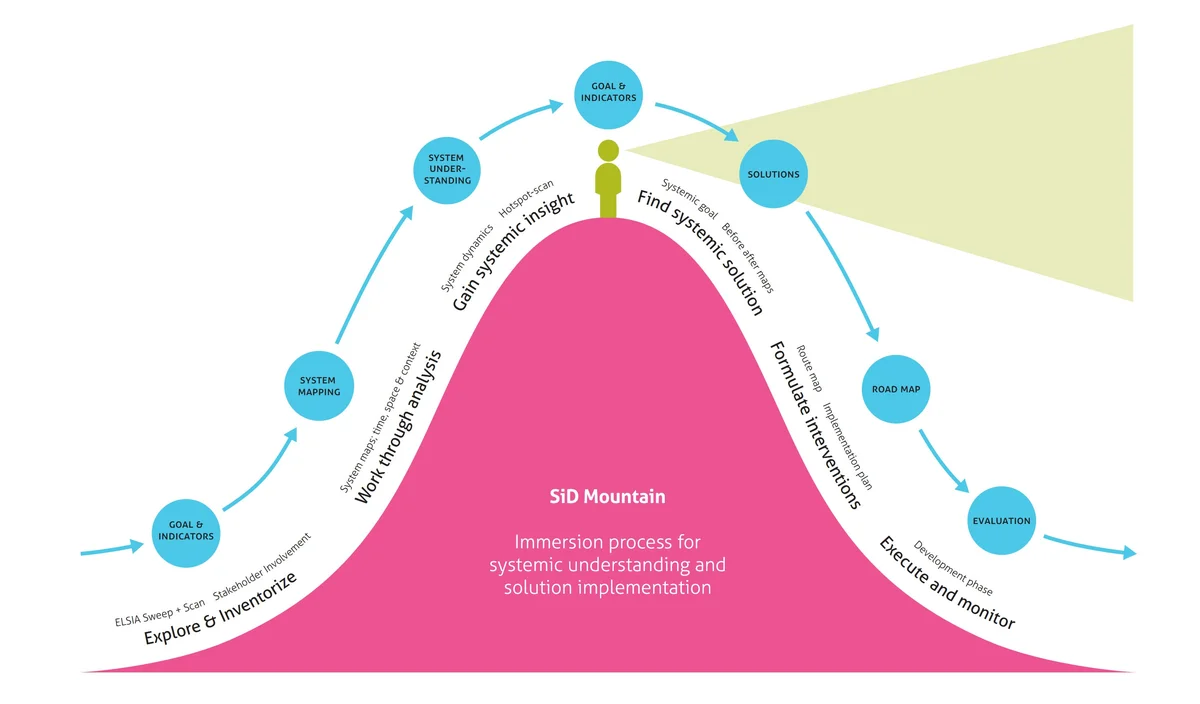
The SiD method visualised as a landscape of interconnected analytical and creative phases
The SiD definition of sustainability
A precise definition matters because it determines what you measure, what you optimise for, and what you miss.
Sustainability is a state of a complex and dynamic system. In this state, a system can continue to flourish without leading to its internal collapse or requiring inputs from outside its defined system boundaries. When applied to our civilisation, this state is consistent with an equitable and healthy society, thriving ecosystems, and a beautiful planet.
The critical word is state. Sustainability is not a physical constant or a fixed target. It is a dynamic condition that emerges from the relationships between a system's components. This means the primary unit of analysis is the relationship, not the object.
Three levels: System, Network, Object
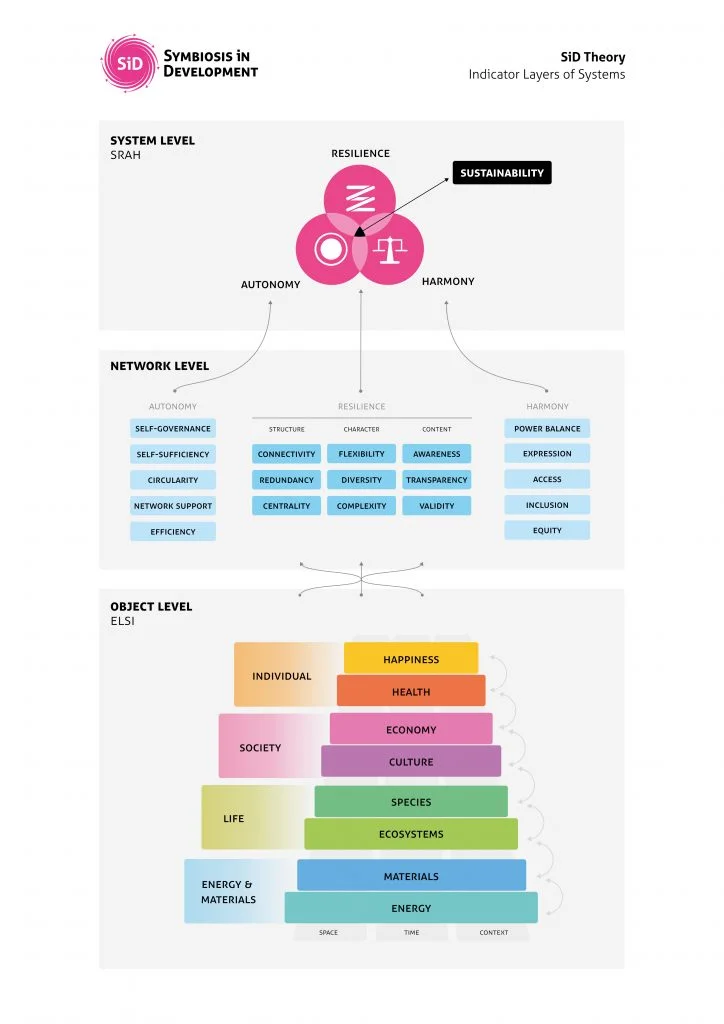
SiD structures every analysis through three nested levels, known as the SNO hierarchy:
System level: the boundaries, goals, and emergent behaviour of the whole. This is where sustainability is evaluated and where the highest leverage exists.
Network level: the relationships and flows between objects. Energy transfers, supply chains, governance links, social bonds.
Object level: the physical and institutional components. Buildings, products, organisations, policies.
Most sustainability work starts and ends at the object level: make the building more efficient, reduce the product's carbon footprint. SiD starts at the system level and works downward. A highly efficient component in a poorly configured network still produces a failing system.
The SNO hierarchy: System, Network, and Object levels with their indicator sets
ELSI: mapping the full spectrum
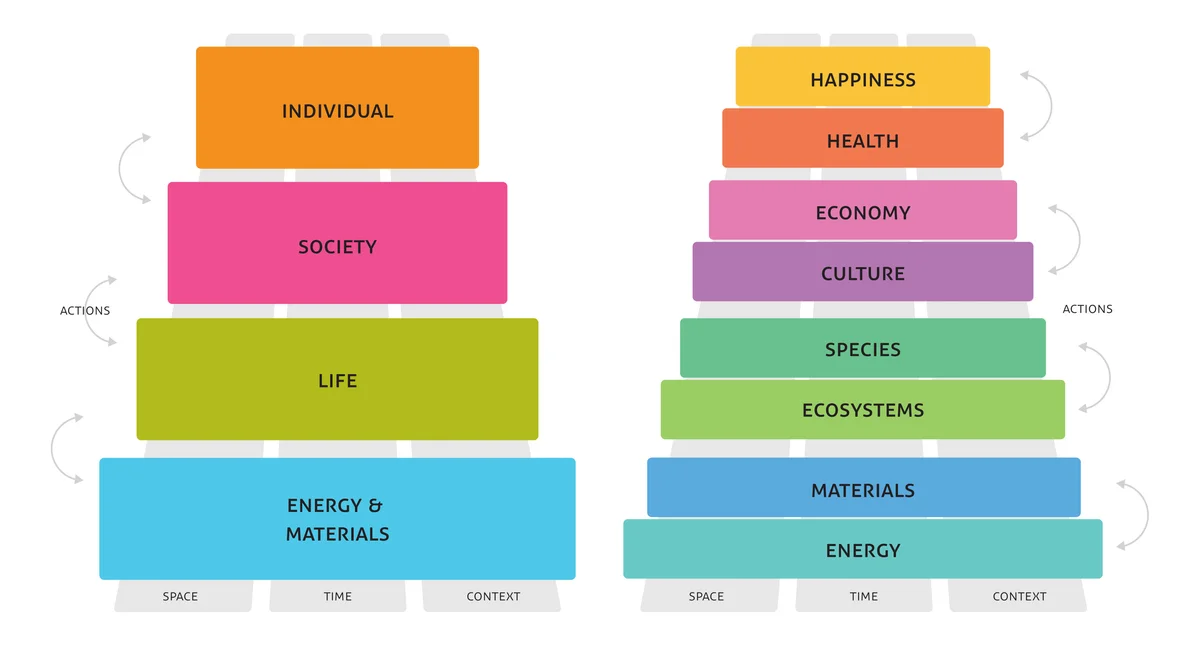
At the object and network level, SiD uses the ELSI framework to ensure completeness. ELSI replaces the triple bottom line (people, planet, profit) with four causally nested dimensions:
Energy and Materials: the physical substrate. Thermodynamics, resource flows, waste streams, circular potential.
These four expand into eight sub-categories (ELSI-8) for detailed analysis. The nesting is causal: individual wellbeing depends on functional societies, which depend on living ecosystems, which depend on stable energy and material flows.
The ELSI 4+8 stack: four causally nested sustainability dimensions expanding into eight analytical categories
The SiD method
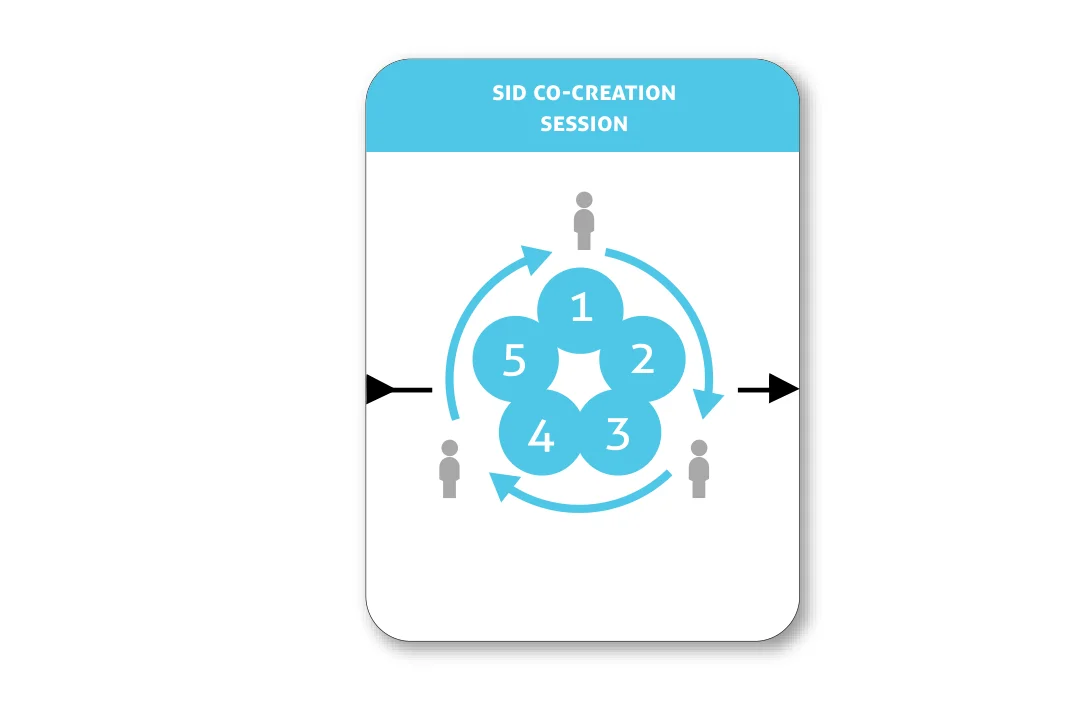
The method translates theory into structured action through iterative cycles of analysis and synthesis:
System definition: establishing boundaries, identifying stakeholders, mapping initial system structure.
System analysis: applying ELSI across all three SNO levels, identifying externalities, mapping causal relationships.
Goal setting: backcasting from desired future states, defining system-level targets, deriving network and object requirements.
Solution development: co-creation sessions generating interventions, evaluating against system-level goals.
Synthesis and evaluation: integrating solutions into coherent roadmaps, testing for rebound effects, defining transition pathways.
These cycles are embedded in a broader four-phase process: Initiation (team building, process planning), Intelligence (research, data analysis, quick-scan), Innovation (co-creation sessions running the method cycles), and Development (feasibility, refinement, action planning).
A SiD co-creation session cycle: the five-step method in a collaborative setting
Evaluation: Resilience, Autonomy, Harmony
SiD evaluates sustainability at the system level through three composite indicators:
Resilience: the capacity to absorb shocks, adapt to changing conditions, and maintain essential functions.
Autonomy: the degree to which a system can sustain itself without depending on external inputs that may become unavailable.
Harmony: the quality of relationships within the system and between the system and its environment.
These three indicators are fed by the network and object indicators identified through ELSI analysis. Together they provide a compact but comprehensive measure of whether a system is moving toward or away from sustainability.
Application in design practice
At Except, SiD is not a theoretical overlay. It is the operating method for every project. When we design a masterplan, the ELSI analysis runs in the first week. When we develop a building concept, the SNO hierarchy structures the brief. When we create a product strategy, the backcasting method defines the roadmap.
The framework scales across all four disciplines. Urban planning projects use it to coordinate energy, water, mobility, and governance across entire districts. Architecture projects use it to stress-test designs against ecological, social, and economic risk. Landscape projects use it to set biodiversity targets and drainage capacity before form is decided. Product and service design projects use it to embed lifecycle thinking from the first specification.
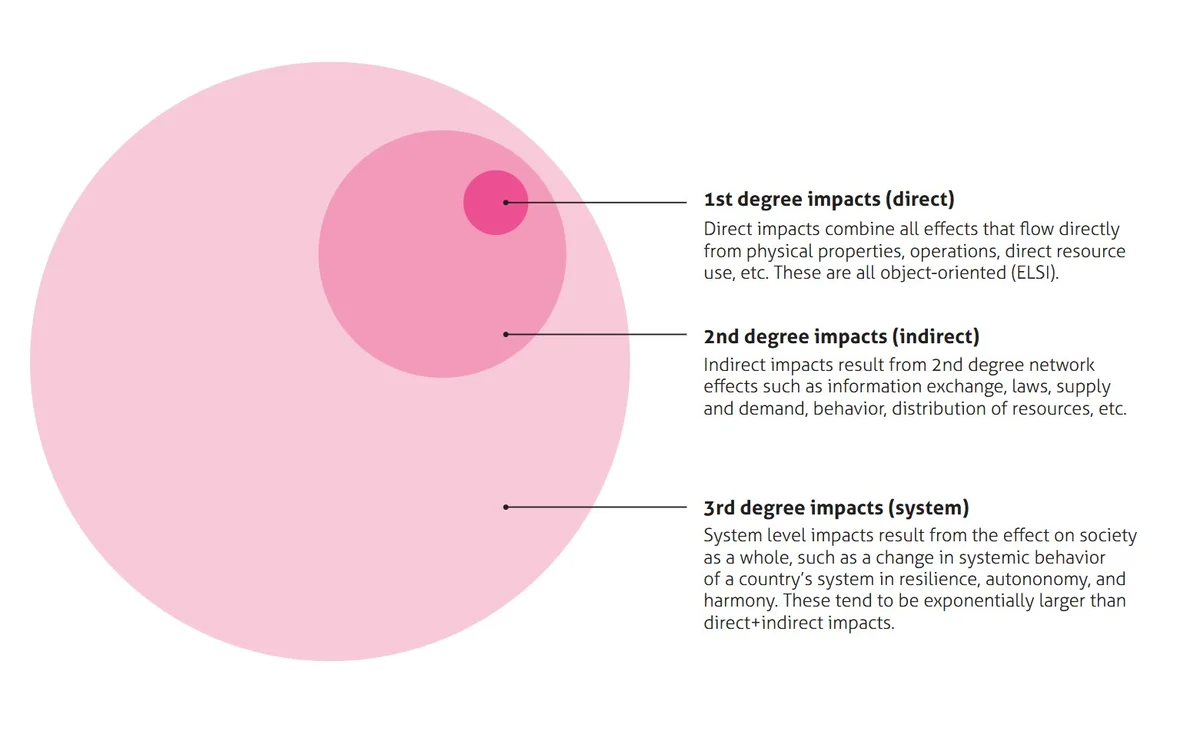
SiD scales of impact: how object-level decisions ripple through network and system levels
Resources
The complete framework is documented at thinksid.org. The omnibus book is available as a free digital download. Quick guides are available in English, Japanese, and Traditional Chinese. Video training courses cover fundamentals and advanced applications.
Except runs SiD masterclasses for organisations and teams: intensive workshops covering the full framework with real project material.