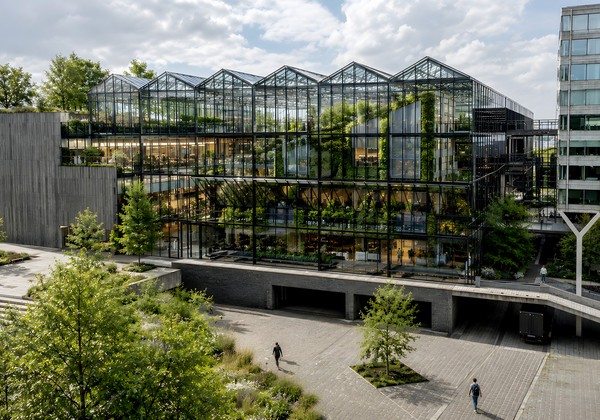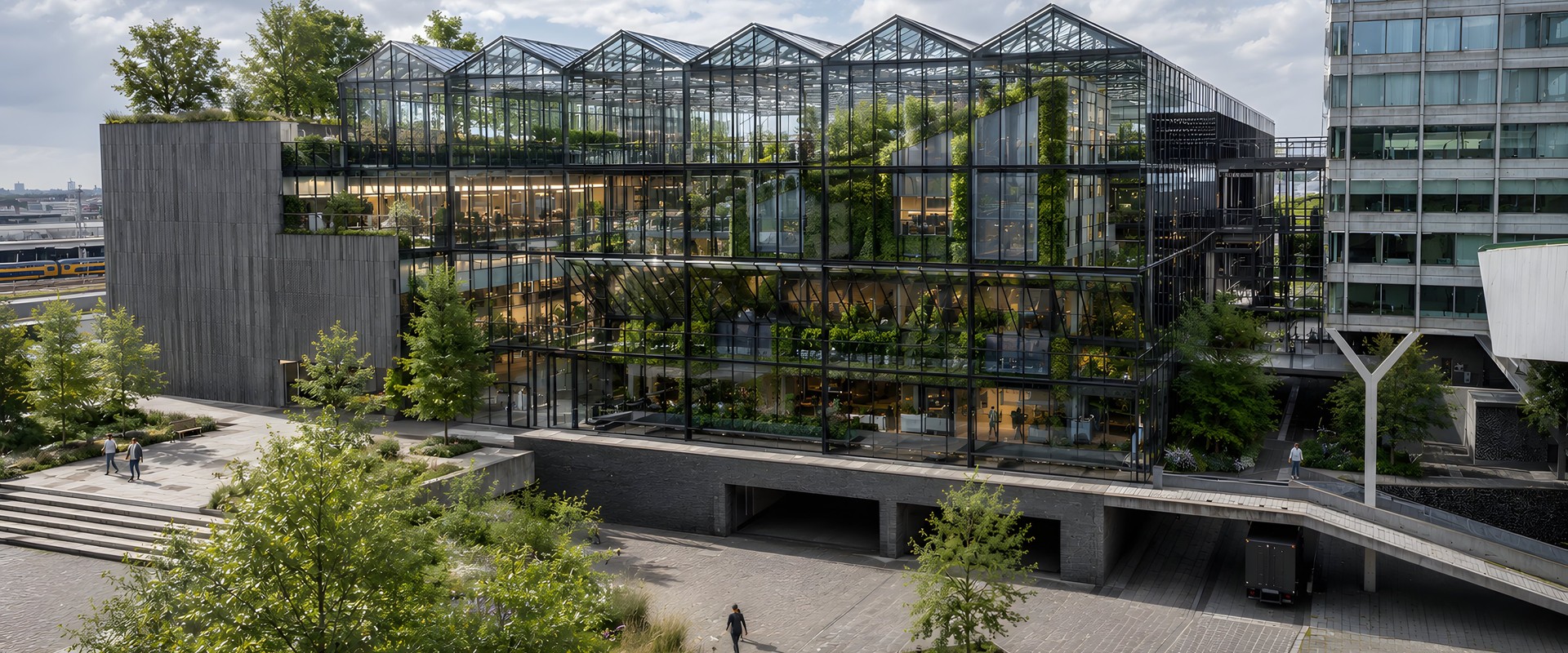
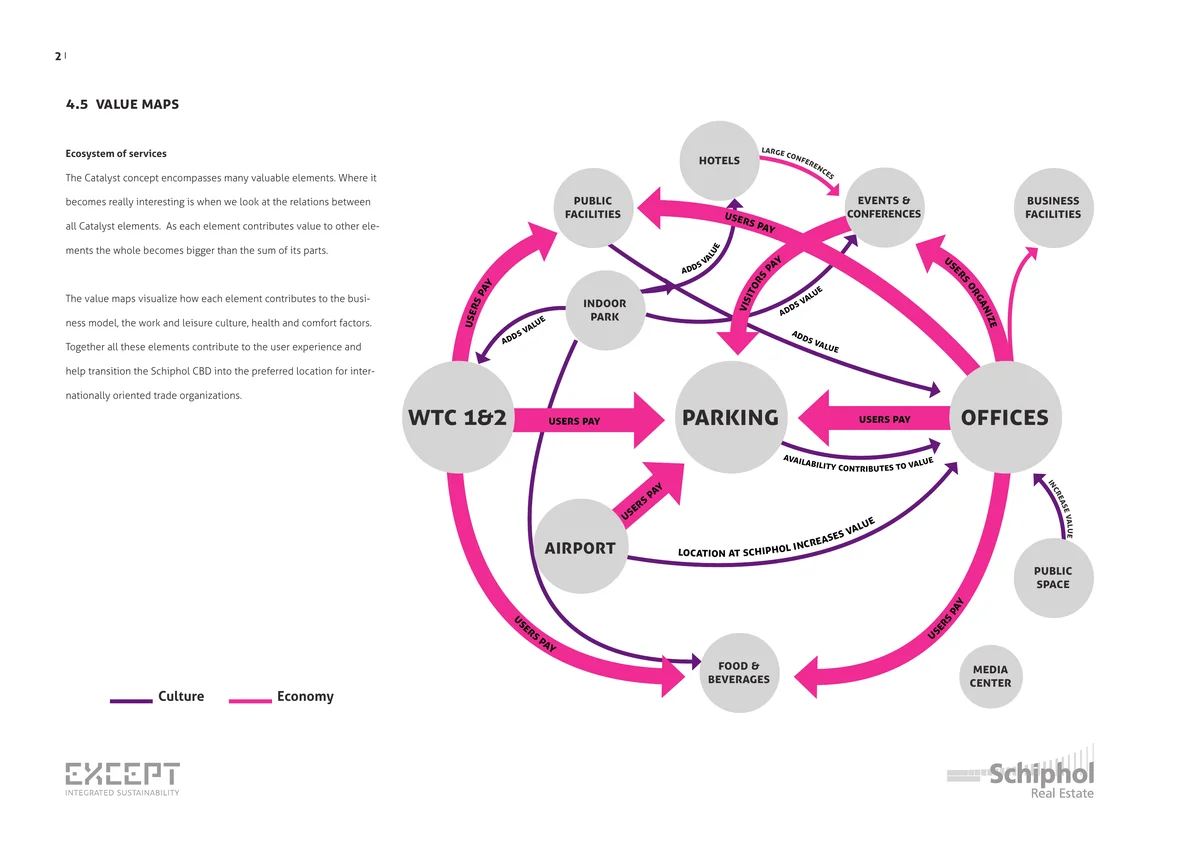
The Schiphol Catalyst Office is a multi-tenant building at Amsterdam Airport Schiphol, designed as a demonstration of how architecture can function as a catalyst for broader systemic change. Rather than optimising the building as an isolated object, the design treats it as a node in the airport's ecosystem of energy, water, waste, and human flows.
Schiphol Catalyst Office: Architecture as System Node
The challenge
Schiphol Airport operates as one of the most complex logistical systems in Europe. A new office building in this context is not simply a workplace: it is a component in a system that processes 70 million passengers annually, manages enormous energy and water flows, and connects to regional and global transport networks. The brief required a building that would actively improve the performance of this larger system.
Systemic approach
SiD's full-spectrum analysis identified leverage points that a conventional sustainability assessment would miss. The building's waste heat feeds into the campus thermal network. Its water management integrates with the airport's rainwater system. Its flexible floorplates accommodate the rapid tenant turnover characteristic of airport environments, preventing the material waste of frequent renovations.
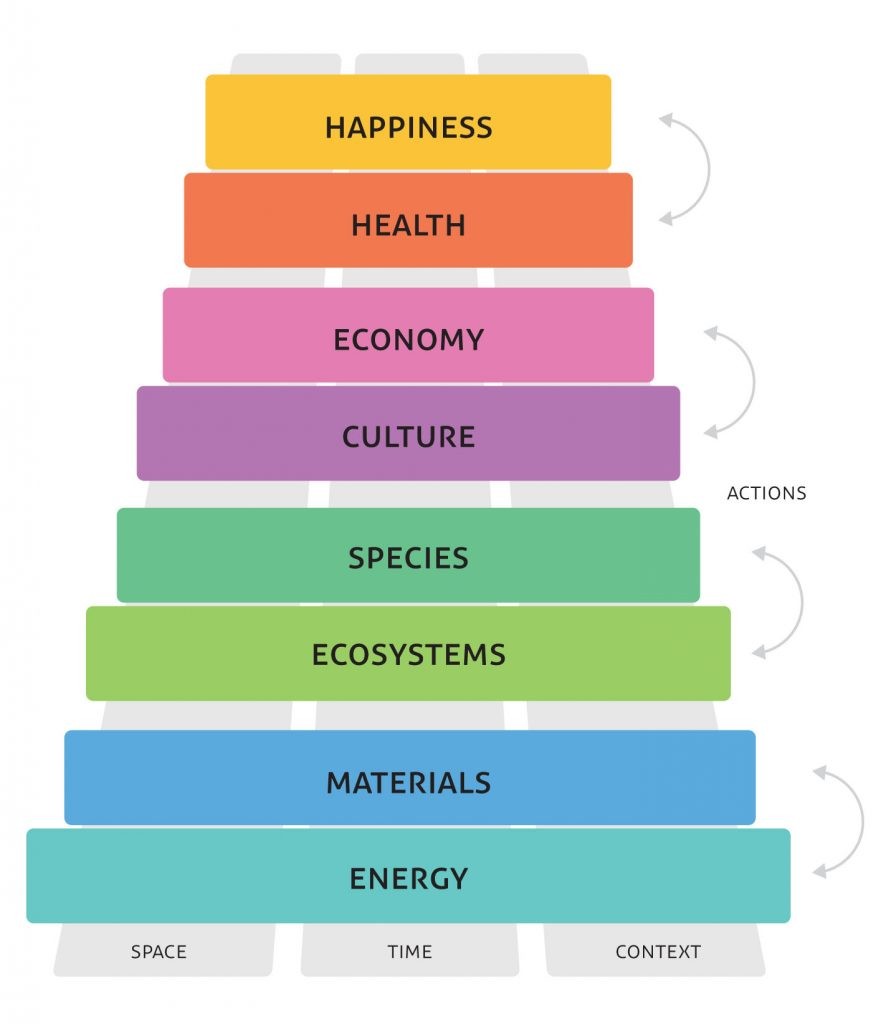
The ELSI analysis mapped the building's performance across all eight categories, from energy and materials through to individual wellbeing for the 2,500 daily occupants. The design optimises at the network level: the building's value is measured not just by its internal metrics but by how it improves the performance of adjacent systems.
Results
The project demonstrates that the greatest sustainability gains in architecture come from network-level design: how a building relates to its context, not just how it performs in isolation. The Catalyst Office has become a reference for airport-integrated sustainable architecture.