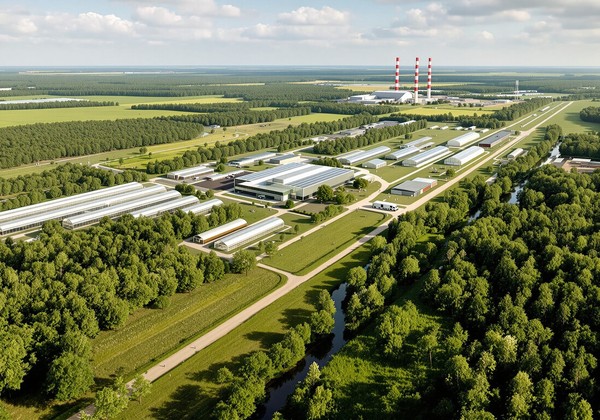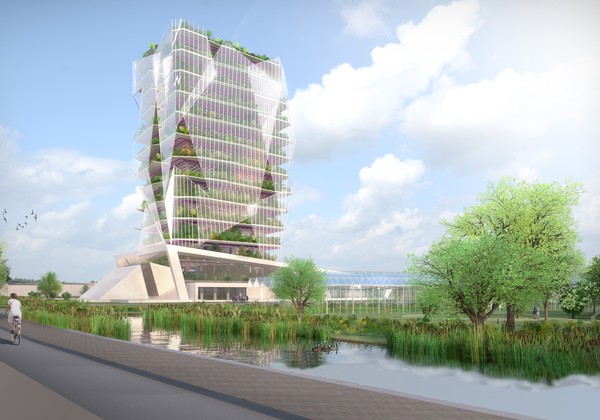
The Estonian Industrial Symbiosis Agro-Park (EISAP) is a masterplan for an integrated industrial district in the Ida-Viru region of Estonia, where the waste streams of one facility become the feedstock for another. The project applies SiD at the intersection of industrial ecology, agricultural production, and regional economic development.
EISAP: Industrial Symbiosis Through Systemic Design
The challenge
Ida-Viru is a former oil shale mining region facing economic transition. The industrial infrastructure exists but operates in linear mode: resources in, products out, waste to landfill. The brief called for a transformation into a circular industrial ecology where material and energy flows are closed, environmental remediation is integrated with productive activity, and new economic value is created from what was previously discarded.
Systemic approach
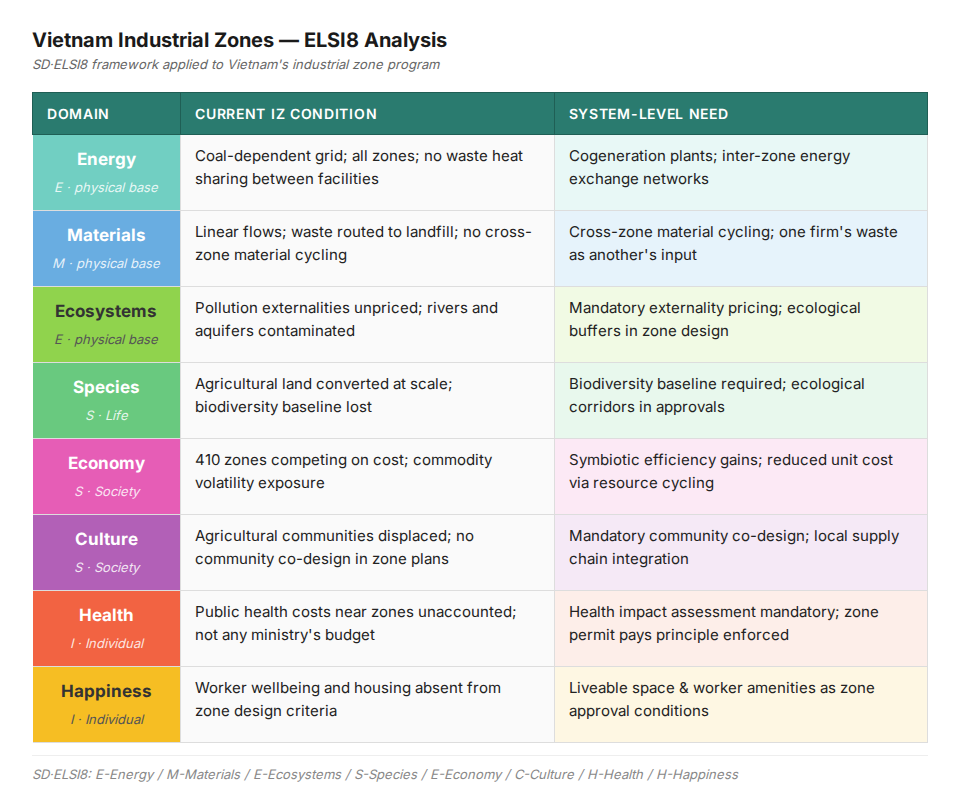
The SiD analysis mapped the complete material and energy metabolism of the existing industrial zone. The ELSI framework identified connections between industrial processes, agricultural potential, and ecosystem restoration that no single-sector analysis would reveal. Waste heat from industrial processes powers greenhouse agriculture. Organic waste feeds biogas production. Mineral byproducts become construction materials.
The SNO hierarchy structured the design from system boundaries (regional energy and material flows) through network relationships (inter-facility exchanges) down to individual facility specifications.
Results
The masterplan defines an industrial district where the closed-loop metabolism reduces waste to near zero, the diversified economic base reduces dependence on single sectors, and the integration of ecological restoration with productive activity creates a district that improves its environment rather than degrading it.